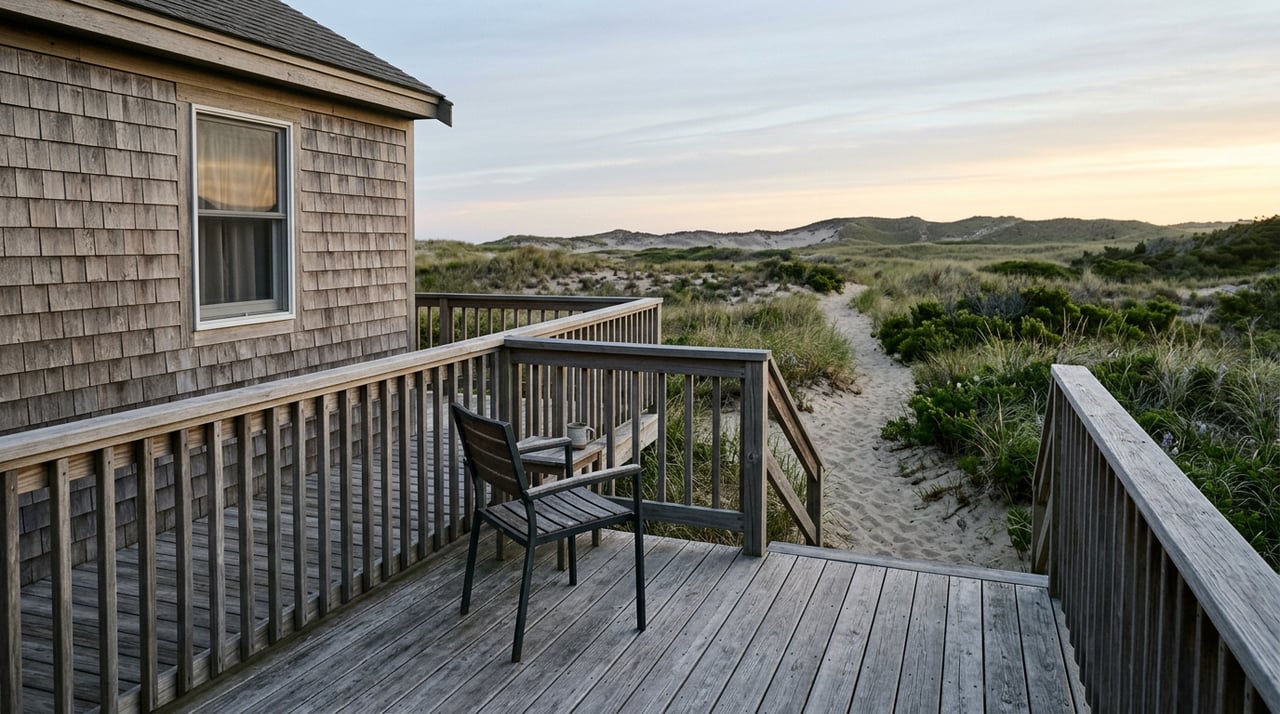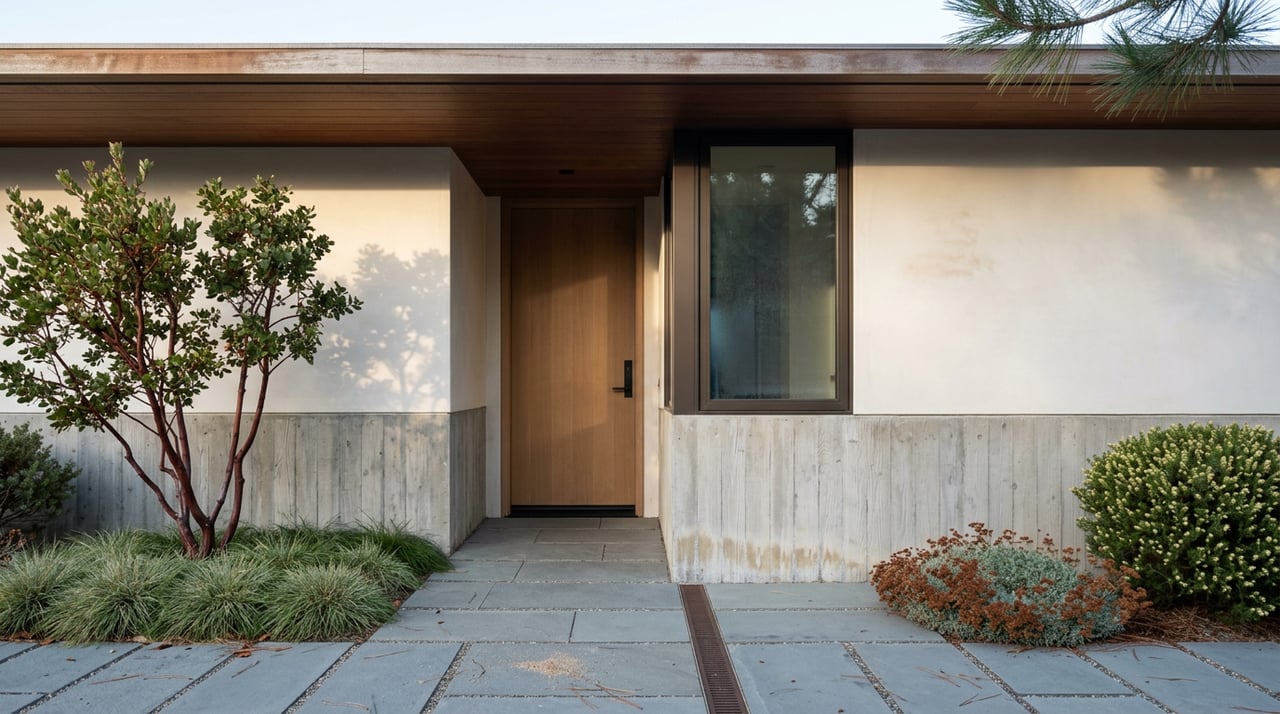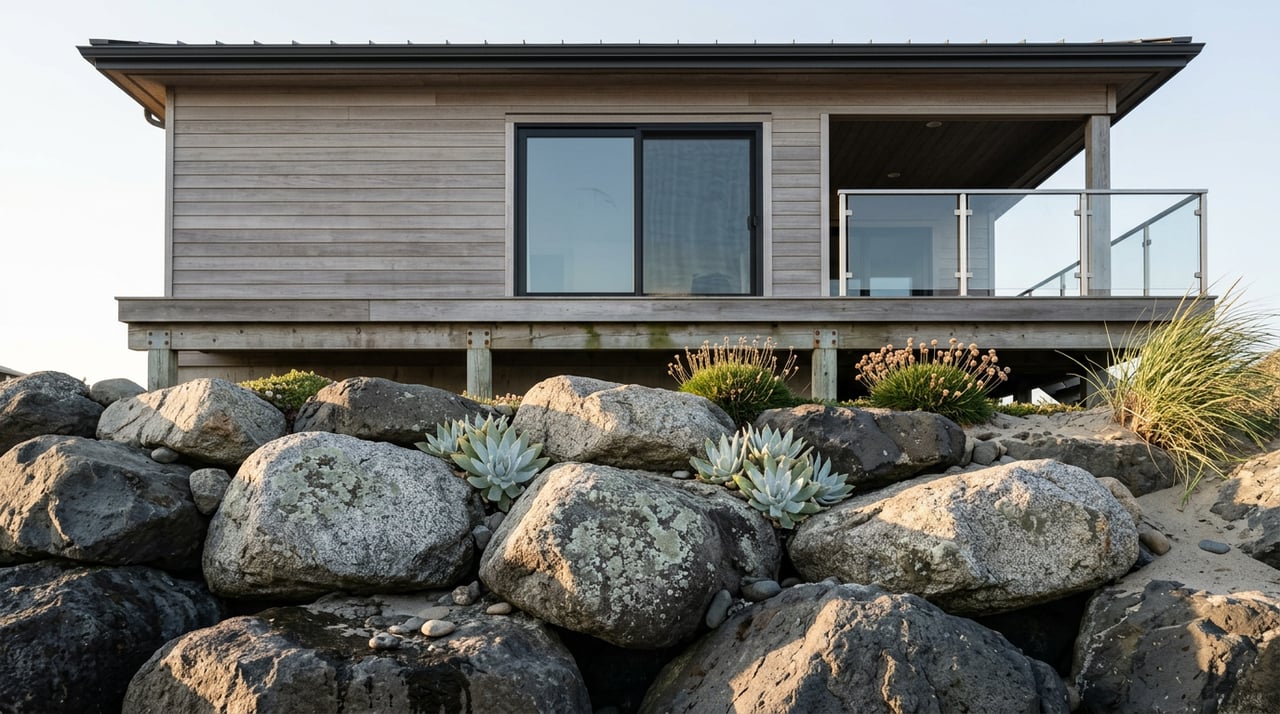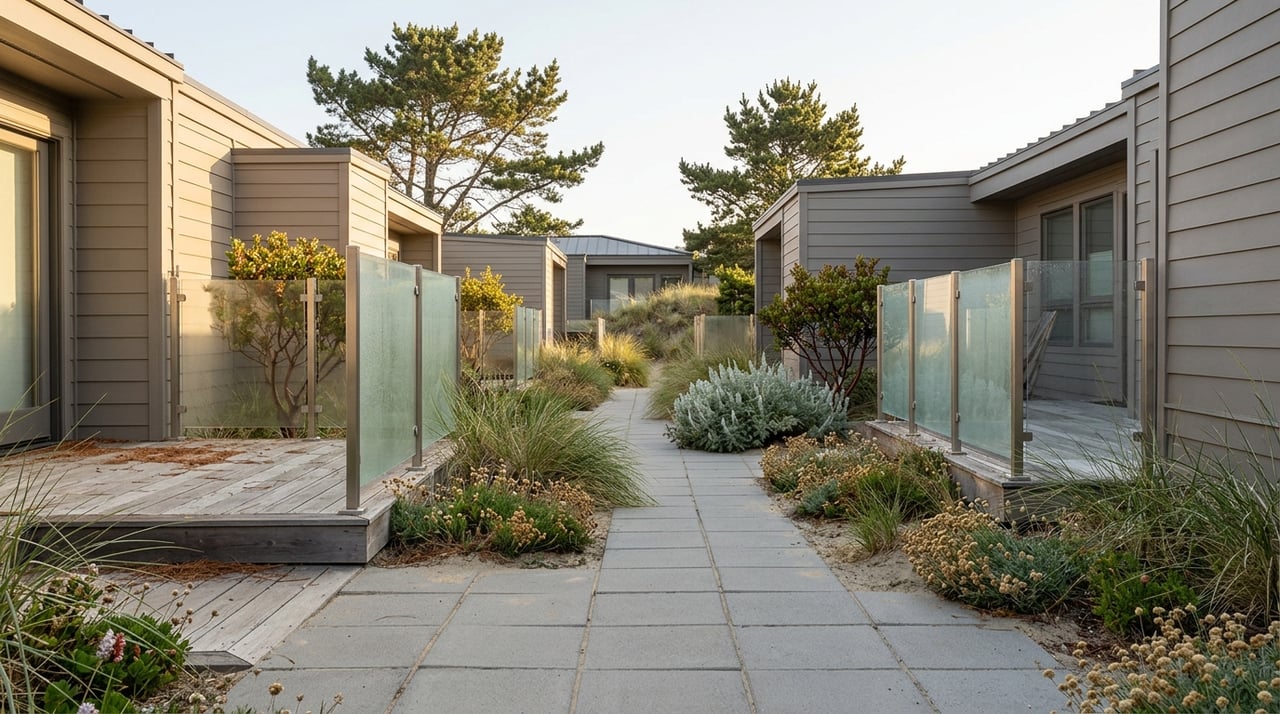
Picture two coastal properties that hit the market the same week this fall. Both sit within a mile of the water. Both are priced in the same range. Both come with the obvious pitch: buy it, furnish it, rent it out when you're not using it. Only one of them can actually do that on day one.
The other has to get in line.
That line is new. Santa Cruz County spent most of 2025 rewriting how it regulates short-term rentals, and the rewrite is now fully in effect. The county's Board of Supervisors gave final approval to the overhaul on August 19, 2025, and the California Coastal Commission certified the coastal-zone provisions on April 16, 2026, which means the rules now apply everywhere in the unincorporated county, including the stretch of coastline that runs through Aptos and La Selva Beach. Everywhere, that is, except Pajaro Dunes.
A Rewrite Built Around Scarcity
The county didn't tighten these rules quietly. A staff report compiled in the fall of 2024 found that 665 of the county's 841 vacation rentals were non-hosted, meaning whole homes with no owner on site, and supervisors treated that number as evidence that short-term rentals were competing directly with local buyers for the same housing stock.
Supervisor Manu Koenig, who led the rewrite alongside Supervisor Justin Cummings, put the frustration plainly at a board meeting in August 2025:
"Nothing's more frustrating than bidding on a house and then losing the bid"
The finished ordinance backs that sentiment with hard numbers. Outside the county's three designated coastal zones, non-hosted rentals are now capped at 270 permits countywide and hosted rentals at 250. Existing permits aren't revoked, but new supply is frozen at whatever the county already had on the books when the rule took effect.
The Zone That Includes La Selva Beach
Inside the three designated zones, the caps get more specific, and one of those zones is the Seacliff/Aptos/La Selva Beach Designated Area, which the county's own boundary description places along Monterey Bay from the Capitola city line through the community of La Selva Beach.
That zone is now capped at 241 non-hosted vacation rental permits and up to 45 hosted permits, for a ceiling of 286 total. As of April 2024, the last count published before the rewrite, that zone already had 83 applications sitting on a waitlist, compared with just 12 in the Live Oak zone farther up the coast. Live Oak's own cap sits at 262 non-hosted permits with 18 hosted, and the Davenport/Swanton zone, the smallest of the three, tops out at 3 non-hosted and 4 hosted.
None of that touches Pajaro Dunes.
Why the Resort Never Entered the County's System
The exemption isn't a loophole someone found. It's written directly into Santa Cruz County code. The sections governing both hosted rentals and vacation rentals each carry the same line: they do not apply to Pajaro Dunes, where rentals are instead governed by an existing development permit.
That phrasing matters because of when it shows up. The county's short-term rental code traces its amendments back through ordinances dated 2011, 2015, 2016, 2018, and 2020, each one tightening the rules for the rest of unincorporated Santa Cruz County. Every one of those amendments carried the same carve-out for Pajaro Dunes. The resort community was established in 1973, decades before the county built out a permit-and-waitlist system for short-term rentals, and it has operated its own on-site rental management infrastructure, with dozens of staff handling reservations, housekeeping, and maintenance, since well before that system existed. The county never folded Pajaro Dunes into the newer rules because Pajaro Dunes was never part of the problem the rules were written to solve.
Here's what that looks like side by side for a buyer comparing the two:
| Pajaro Dunes | La Selva Beach / SALSDA zone | |
|---|---|---|
| Governing authority | Existing resort development permit | Santa Cruz County short-term rental ordinance |
| Rental cap | None imposed by the county | 241 non-hosted + 45 hosted (286 total) |
| Waitlist (last published count, April 2024) | Not applicable | 83 pending applications |
| Path to a new permit | Through the resort's own association process | Wait for a permit to be relinquished or renewed |
What This Actually Means for a Buyer
None of this means a Pajaro Dunes purchase comes with zero rules. Every unit still has to work through the resort's own association process, register the rental, and meet the standards that process sets, the same way any HOA-governed community requires an owner to follow its rental policy. What the exemption removes is the county layer entirely. There's no block-density percentage to clear, no application sitting behind 83 others, and no risk that a future countywide cap freezes the property out before an owner ever applies.
A property in the SALSDA zone doesn't carry that certainty. If it already holds a valid, active permit, that permit is grandfathered and can be renewed under the new rules. If it doesn't, a buyer is stepping into a capped pool that was already oversubscribed by more than six times its own waitlist size as of the last public count.
Before writing an offer on a coastal property anywhere between Pajaro Dunes and the SALSDA boundary near La Selva Beach, it's worth confirming a few things directly rather than assuming from the listing:
- Whether the property currently holds an active, valid short-term rental permit, and whether that permit transfers with the sale or has to be reapplied for
- Which side of the SALSDA boundary the parcel actually sits on, since the zone line runs along Bonita Drive, San Andreas Road, and the Urban Services Line rather than following an intuitive street grid
- Whether the listing's advertised rental income reflects a licensed, permitted operation or an unpermitted one that could be shut down under the new platform-enforcement rules
- For a Pajaro Dunes purchase, what the resort's own association process requires for registering a new rental, since that process now functions as the only gate a buyer has to clear
Two Questions Worth Asking First
Does the Pajaro Dunes exemption mean anyone there can start renting with no oversight at all? No. The exemption removes the county's permit-and-waitlist system, not the resort's own rules. Every rental still runs through the association's process, which sets its own standards for registration and operation.
Does being inside the SALSDA zone mean a property can never get a rental permit? Not necessarily. A home that already holds a valid permit keeps it and can renew. The cap only limits how many new non-hosted permits the zone can issue going forward, which is exactly why the waitlist exists.
The county's rewrite was built to slow down a specific kind of growth, whole homes converting to full-time vacation rentals in neighborhoods where people also live year-round. Pajaro Dunes was built as a resort from the start, which is the entire reason it sits outside that fight. For a buyer weighing rental income as part of the purchase, that difference is no longer a footnote. It's the first thing worth checking, before the price per square foot.
If you're comparing coastal properties for their rental potential and want a clear read on which permit path applies before you make an offer, Melanie & Natalia can walk through the specifics with you. Schedule a Consultation to talk through what a given property, and its zone, actually allows.