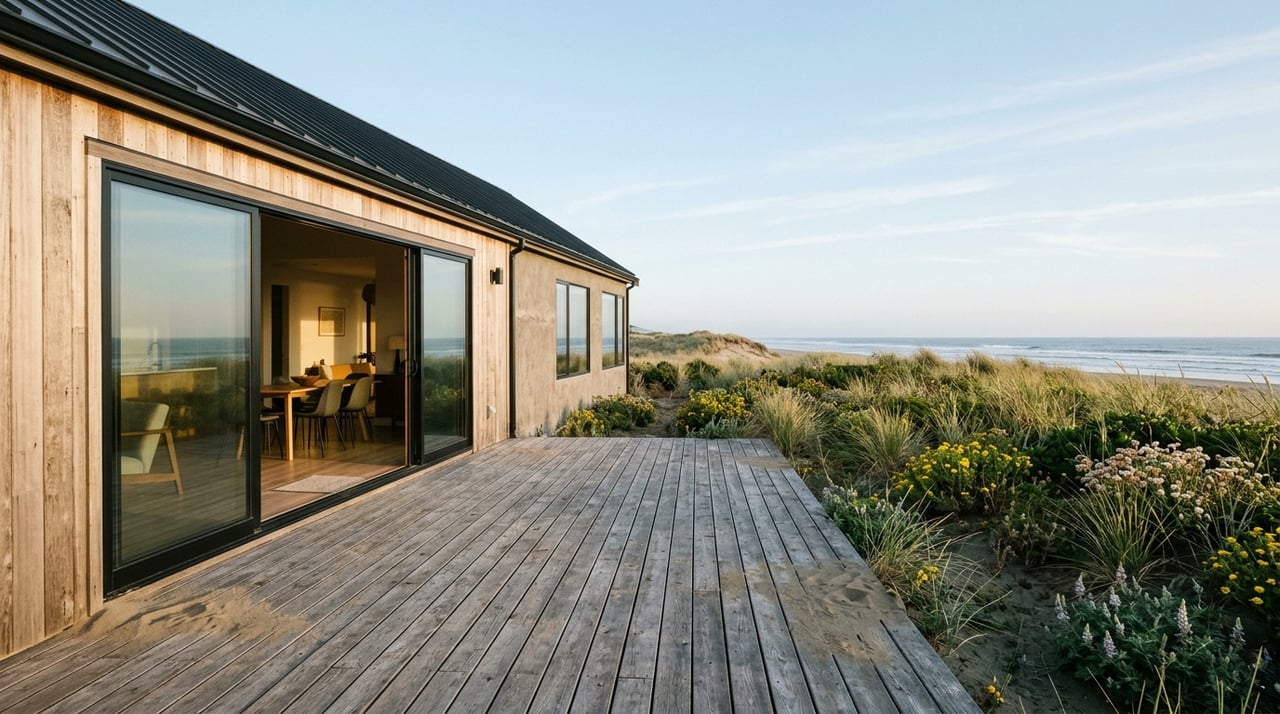
If you are torn between an oceanfront home and a dune-side property in Pajaro Dunes, you are asking exactly the right question. In this gated beachfront community, the choice is not simply about being closer to the water. It is about how you want to experience the coast every day, what kind of views matter most to you, and how location within the community shapes privacy, access, and long-term ownership. Let’s dive in.
What oceanfront vs dune-side means
In Pajaro Dunes, oceanfront versus dune-side is not always a strict line on a map. Official property descriptions use terms like beachfront, full ocean view, partial ocean view, dune view, beach level, second row, third row, and third-level. That means a home’s exact row and floor can matter just as much as the broad label attached to it.
This is one reason shopping here takes a close eye. A third-level unit may offer a much wider ocean panorama than a lower-level home that sits physically closer to the beach. In other words, the best fit often comes down to exposure, elevation, and sightline.
Why Pajaro Dunes feels unique
Pajaro Dunes sits in Santa Cruz County near Watsonville, about 20 miles south of Santa Cruz and 25 miles north of Monterey and Carmel. The community stretches along a 1.5-mile beachfront setting with more than a mile of soft white sand. It is also set on a beach sandspit between Watsonville Slough, the Pajaro River, and the Pacific Ocean.
That setting creates the coastal lifestyle buyers are drawn to here. It also means the community has a very specific physical context, where water, dunes, and beach access shape daily life as much as the homes themselves.
Oceanfront living in Pajaro Dunes
Oceanfront homes are usually the top choice for buyers who want the most immersive beach experience. If your ideal morning includes looking straight out at Monterey Bay and feeling closely connected to the sand, this side of the decision will likely appeal to you most.
Oceanfront pros
Oceanfront and upper-level ocean-view homes offer the most direct visual connection to the coast. Official listings in Shorebird, Pelican Point, and Cypress show that some homes have full ocean views, while beach houses can range from beachfront to several rows back with varying beach and river views.
There is also a different day-to-day feeling in true oceanfront locations. You are more immediately connected to the shoreline, the changing light, and the open horizon. For many buyers, that is the essence of owning in Pajaro Dunes.
Oceanfront tradeoffs
The biggest tradeoff is exposure. Santa Cruz County’s Local Hazard Mitigation Plan identifies Pajaro Dunes as vulnerable to coastal storm flooding with sea-level rise and coastal erosion. The plan also notes that the community fronts about a mile of armored coastline that is vulnerable to severe dune erosion.
For buyers, that makes frontage and elevation more than just lifestyle features. They are also long-term ownership considerations. California Coastal Commission guidance says sea level rise is expected to continue intensifying flooding, erosion, and beach migration along the coast.
Dune-side living in Pajaro Dunes
Dune-side homes can be a strong fit if you want a more tucked-away coastal feel. While they may trade some direct panorama for a more buffered setting, they still benefit from the same gated beachfront community and shared access to the sand.
Dune-side pros
Dune-side properties often feel more visually sheltered than true beachfront homes. Based on listing language and the dune-buffer setting, they can offer a quieter and more private feel within the same compact community.
This option also works well for buyers who care about being near the beach but do not need a full front-row view to enjoy the lifestyle. Some dune-side homes still include partial ocean views, and floor level can make a meaningful difference.
Dune-side tradeoffs
The main tradeoff is that the beach experience feels a little less immediate. You still have access to more than a mile of sand, but the walk to the beach may be less direct than from a true oceanfront location.
View quality can also vary widely. A dune-side label does not automatically mean no ocean view, but it does mean you should look closely at the exact floor, row, and orientation of the home.
Why floor and row matter so much
In Pajaro Dunes, broad labels only tell part of the story. A beach-level unit may sit close to the sand but have a narrower sightline, while a third-level unit farther back may open up a sweeping ocean view.
That is especially important in the condo complexes. Within Shorebird and Pelican Point, listings show everything from beach-level dune-view homes to third-level full-ocean-view units. If you are comparing homes, the most useful question is often not “Which complex is better?” but “What can I actually see from this specific unit?”
How the property types compare
Different areas of Pajaro Dunes create different living experiences, even before you get to the oceanfront versus dune-side question.
Beach houses
The beach-house inventory includes homes with 2 to 5 or more bedrooms. Some are beachfront, while others sit in second, third, or fourth-row positions. Floor plans vary too, with both one-story and multi-story layouts represented.
Pelican Point condos
Pelican Point is at the south end of the property and is described as having the most expansive beaches. The buildings include 1- to 4-bedroom condos in 3-story buildings, with a mix of beach-level partial-ocean units, beach-level dune-view units, and third-level full-ocean-view units.
Cypress Grove townhomes
Cypress Grove includes 24 two- and three-level homes with layouts up to six bedrooms. These townhomes are typically more spacious than Shorebird or Pelican condominiums, and the resort states that all of them have direct ocean views.
Shorebird condos
Shorebird is a nine-building, 3-story condo complex with 1- to 3-bedroom units. Views vary from dune views to full Monterey Bay views, and the difference from one floor to another can be significant.
Amenity location can shape your choice
Not every part of Pajaro Dunes has the same feel. Shorebird sits on the north side of the property next to the Cypress and Lagoon event facilities, along with eight tennis and pickleball courts.
If you want a more amenity-forward or social setting, that proximity may be a plus. If you prefer a more tucked-away feel, you may want to pay closer attention to homes that sit farther from those activity centers.
Ownership questions to think through
In a coastal setting like Pajaro Dunes, lifestyle and ownership planning go hand in hand. Santa Cruz County notes that development in the Coastal Zone generally requires a Coastal Development Permit unless an exemption applies. The County also says that even some exempt projects may still need permits if they are on a beach or within 50 feet of a coastal bluff.
The County also notes that roads leading to Pajaro Dunes North and South can flood during winter storms, which can affect vehicular and emergency access. These are practical points worth understanding before you buy, especially if you are considering updates, remodel plans, or long-term hold strategy.
Questions to ask when touring
As you compare oceanfront and dune-side options, ask questions that go beyond the photos.
- Is the view full ocean, partial ocean, dune, river, or a mix?
- What floor is the unit on, and how does that change the sightline?
- How direct is the walk to the beach access point?
- Is the home near courts, event spaces, or other active amenities?
- Are there HOA or coastal permit considerations tied to this property?
- Has the home been updated with coastal hazards and access in mind?
Which option fits you best?
If you want the strongest beach-house feeling, the most open horizon, and the most immediate connection to the shoreline, oceanfront is usually the better match. If you value a more buffered and tucked-away setting and are comfortable trading some panorama for that feel, dune-side may suit you better.
The key is to avoid treating this as a simple best-versus-worst choice. In Pajaro Dunes, the right fit often comes down to the exact complex, row, floor, and exposure. That is why a thoughtful, property-by-property comparison matters so much here.
If you are weighing oceanfront versus dune-side living in Pajaro Dunes, working with a team that knows the community at the unit-by-unit level can make the decision much clearer. Reach out to Melanie Langemak to schedule a consultation and talk through which setting best matches your goals.
FAQs
What is the difference between oceanfront and dune-side living in Pajaro Dunes?
- Oceanfront homes generally offer a more direct connection to the beach and wider ocean views, while dune-side homes often feel more buffered and private, with view quality depending heavily on floor and row position.
Do dune-side homes in Pajaro Dunes ever have ocean views?
- Yes. Official listings show that some dune-side homes can have partial ocean views, and upper floors may improve the sightline significantly.
Which Pajaro Dunes property types offer the best ocean views?
- View quality varies by specific unit, but official listings show full ocean views in some Shorebird, Pelican Point, and Cypress homes, while Cypress Grove townhomes are described as having direct ocean views.
Are oceanfront homes in Pajaro Dunes more exposed to coastal hazards?
- Pajaro Dunes as a whole is identified by Santa Cruz County as vulnerable to coastal storm flooding, sea-level-rise impacts, and erosion, so frontage and elevation are important ownership considerations.
What should buyers ask when touring a Pajaro Dunes home?
- Buyers should ask about the exact view type, floor level, beach access route, proximity to amenities, HOA or permit considerations, and whether the home has been updated with coastal conditions in mind.