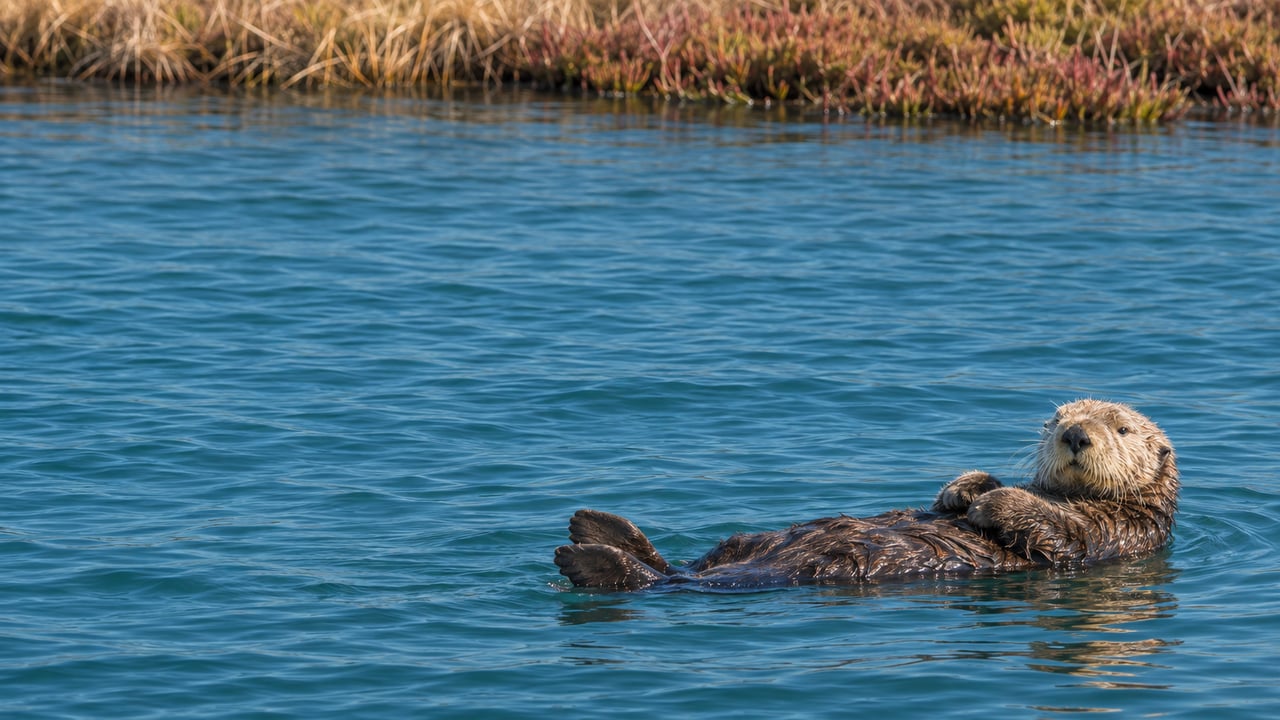
On the morning of Sunday, November 8, the first animal Sanctuary Cruises' passengers saw was in the harbor. The boat hadn't left its slip yet. A sea otter the crew calls Birdadette was there, and according to the Sanctuary Cruises captain's log, she had already been feeding on common murres that morning. Then the boat motored through the harbor past more otters, California sea lions, great egrets, brown pelicans, western grebes and common loons before reaching the Monterey Submarine Canyon.
That's a lot of animals before the first whale. In late 2026 that's also how the whole trip goes. This fall's humpbacks left the bay early. The gray whales that winter trips are built around pass in their biggest numbers in January. For the weeks between now and the holidays, a whale-watch trip from Moss Landing, just down the coast from Pajaro Dunes, means a longer ride to fewer whales. The dolphins and harbor animals are what you can count on.
From the Harbor Mouth to an Hour Offshore
On Tuesday, October 13, Sanctuary's crew logged 10 to 15 humpbacks feeding near the Moss Landing harbor mouth and counted 20 across the morning. That same day they watched orcas attack a common dolphin off Moss Landing.
By Halloween, the count was seven humpbacks across two trips. The October 31 log said the whales were traveling in steady, set directions and that most were "early migrators." The ones still in the bay were diving longer because the anchovy bait balls had moved deeper in the water column.
The November 8 trip found two humpbacks. One was a curious little whale that kept surfacing beside the boat. The other was lounging in giant kelp, a behavior called kelping, which the crew compares to a spa treatment because it helps the whale shed old skin. Before the boat left the canyon, the crew had already told passengers what to expect:
"Guests settled in, understanding that since the Eastern Pacific Group of humpbacks were migrating weeks earlier this year we'd likely need to travel an hour or more to encounter whales."
In mid-October, whales were feeding at the harbor mouth. By early November, the crew was planning on a run of an hour or more to reach them. The day before, on Saturday, November 7, Sanctuary found three humpbacks feeding together about seven miles west of Moss Landing. They were diving for three to twelve minutes at a time, deeper than normal according to the crew.
The whales haven't all left. Across the bay, the Monterey Bay Whale Watch sightings log recorded three November 7 trips that found 4, 9 and 10 humpbacks. Boats can still find humpbacks this month, but the search now takes much longer than it did in October.
What Fills the Trip Now
If humpbacks are now the bonus, dolphins are what you can count on. On October 31 the Sanctuary crew estimated about 1,000 short-beaked and 500 long-beaked common dolphins, many in nursery pods with calves swimming close beside the adult females. On November 7, a large pod of common dolphins rode the bow and surfed the wake on all sides of the boat. On November 8, a small pod of bottlenose dolphins escorted the boat back to the harbor mouth. The crew also logged a northern fulmar resting on the stern and some Cassin's auklets.
Bigger animals still turn up. Monterey Bay Whale Watch reported two blue whales, five humpbacks and 40 Risso's dolphins on its November 5 trip. Earlier in October, Princess Monterey Whale Watching found four humpbacks near Moss Landing on October 8. On a separate trip that day it encountered two orcas, Orion and Bumper, with more than 300 long-beaked common dolphins. The operators' own seasonal guides still list orcas as possible through December. Blue Ocean Whale Watch says orcas are seen most often from March through early June and again from September through December, and that humpbacks feed in the bay from March through December.
The Gray Whale Count Builds Toward January
Gray whales are the other half of this gap. NOAA Fisheries counts southbound gray whales from its Granite Canyon station south of Monterey. Its July 2026 technical report says the shore surveys overlap the southbound migration from December through February, and its analysis models the season as running from December 1 to February 28. Last winter's sightings show how that window filled in:
- December 20, 2025. A Princess Monterey trip logged humpbacks and no gray whales.
- January 5, 2026. NOAA's survey effort for the 2025/26 season began. The start was later than usual, since surveys typically begin in late December.
- January 10, 2026. Princess Monterey logged gray whales on both of its trips, including a large group on the 12:30 departure.
- January 19, 2026. NOAA's observers recorded the season's highest daily count, 158 gray whales.
- February 1, 2026. Princess Monterey was still logging gray whales.
- February 13, 2026. NOAA's survey effort ended.
The population passing the coast is larger than it was two winters ago. According to NOAA Fisheries, the eastern North Pacific gray whale estimate fell to about 11,700 to 14,200 whales in 2024/2025. It then rose to between 15,930 and 20,530 in 2025/2026. NOAA adds that the jump is bigger than expected growth for baleen whales and that changing migration routes and survey factors may be part of it. Calf production has stayed low since 2019.
Taken together, the humpbacks are leaving now and the grays are building toward a mid-January peak. Late November and most of December fall between the two.
The December Schedule Shrinks to Match
The operators' booking calendars follow the same pattern. All three Moss Landing whale-watch companies leave from 7881 Sandholdt Road.
- Blue Ocean Whale Watch. Its November calendar shows 9 a.m. trips of three to four hours, plus 1 p.m. trips of two to three hours on most days. In December that drops to one departure: a 10 a.m. trip of three to four hours every day from December 1 to 31 except Christmas Day, with no afternoon trips on the calendar. At the time of writing, fares start at $90.10 for the longer trip and $68.90 for the two-to-three-hour trip. Its booking page lists a separate "Winter Whale Watch" that runs in January and February. Check-in is at the top of B dock, 20 minutes before departure, according to Blue Ocean's directions page.
- Sanctuary Cruises. Its booking calendar for Monday, November 9 showed an 8 a.m. trip from $68.90 and an 11:30 a.m. trip from $90.10. The Sanctuary FAQ says its 8 a.m. two-hour and 10 a.m. to 2 p.m. four-hour trips are usually the calmest, and that afternoon trips are added seasonally or when the weather allows.
- Sea Goddess Whale Watch. It advertises two-to-three-hour trips with departures that vary by season. Its booking page priced a 9:30 a.m. trip on November 11 at $74.15 for an adult on the main deck and $95.35 for an adult VIP seat, fees included.
These fares and times are snapshots from booking calendars that change often. Check them again on the day you book.
The length of the trip now matters more than usual. If the boat needs an hour or more to reach the humpbacks, a three-to-four-hour trip leaves real time with the whales. On a two-hour trip, much of that time goes to the run out and back, so the shorter trips are better suited to dolphins and the harbor wildlife.
From Shore, the Harbor Does the Work
You can see a good share of the November 8 trip's wildlife without a ticket. The Elkhorn Slough Foundation lists Moss Landing, North Harbor and Moss Landing State Beach as places with paved roads and parking right beside the slough for birding and otter viewing. The U.S. Fish and Wildlife Service has described sea otters resting near Moss Landing's north jetty and people watching them from Jetty Road. Moss Landing State Beach is on Jetty Road, and California State Parks lists wildlife viewing and birdwatching there.
Closer to home, Zmudowski State Beach includes the Pajaro River estuary and wide views across Monterey Bay. State Parks lists it as a spot for bird-watching and wildlife viewing.
If you have guests coming in December, Sanctuary's FAQ points to its morning trips as usually the calmest, and the November logs show dolphins and a few lingering humpbacks on those trips. Once the gray whales are moving through in January, the trip is worth taking again.
If you're planning a winter stay or hosting visitors at Pajaro Dunes this season, Melanie & Natalia are happy to share what we know about this stretch of coast. Schedule a consultation and we'll talk through the beaches, the bay and the timing that fits your plans.